

Summer is a slow season for planting, which means it’s a great time for cleaning. The season is typically hot, no matter where you are, but I have good news: Cleaning should not involve hours working in the sun during each visit.
To understand why, let’s talk a bit about lichen.
Have you ever worked on a pink granite stone? For some reason, they are prone to all types of lichen, but especially crustose. Crustose lichen can cover the entire top and back of a rough-surfaced headstone. In fact, the rougher the cut the happier it seems to be. (Honestly, when we arrive at a site and realize the stone is pink, it’s a struggle not to groan out loud.)
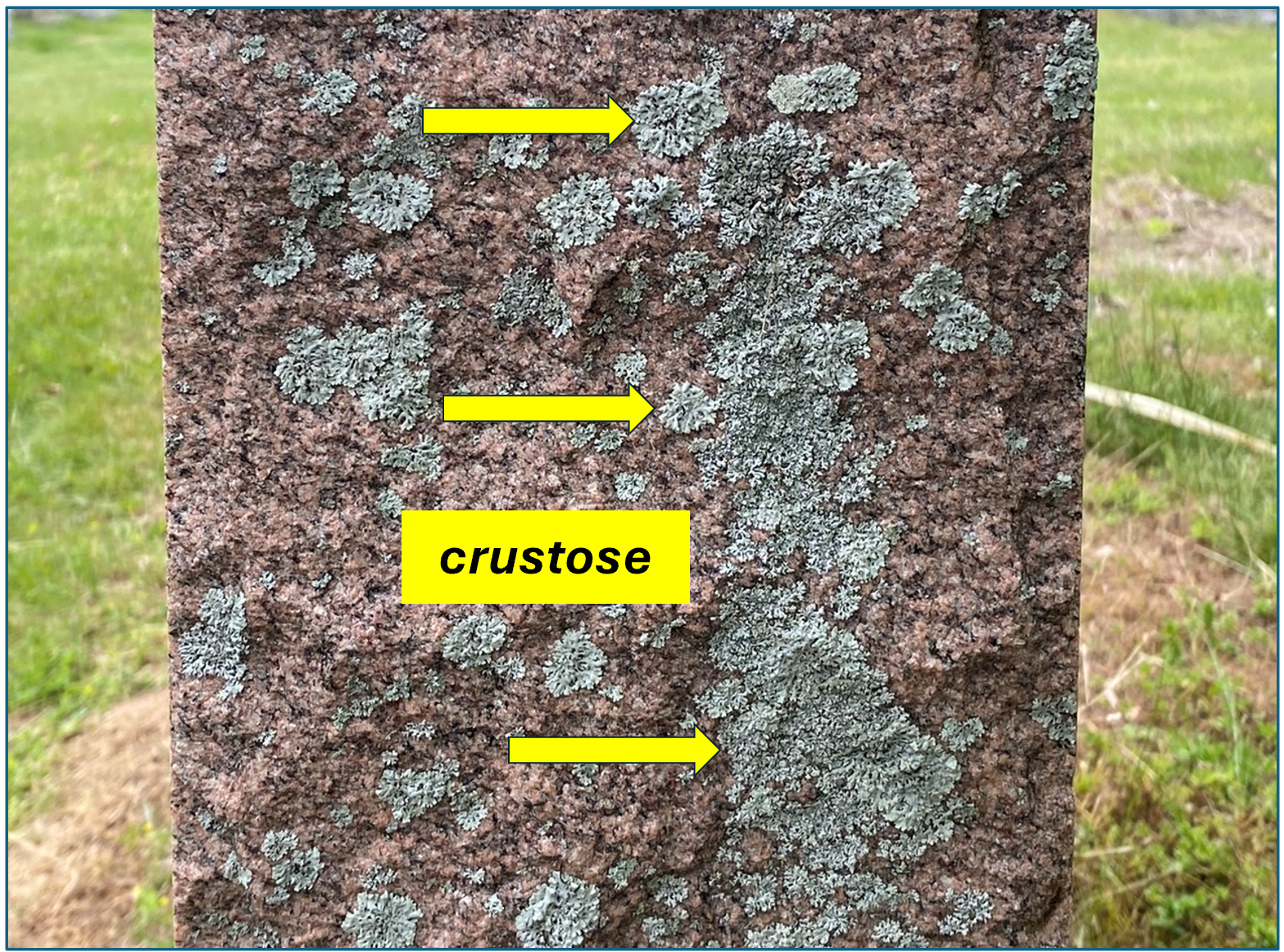
Crustose lichen spells trouble!
The most troublesome lichen, though, is the lecanora‑type crustose lichen, and it sets on all types of stone. You know this lichen: flat, round circles with a darker or lighter spot in the center. It starts with one circle, and as it grows it spreads until you have patches of lichen all over the place. It is extremely difficult to remove on all but the most polished of surfaces.
More than its impact on aesthetics, lichen left untreated can lead to stone deterioration. The lichen “roots” grow into the pores of the stone, weakening it, so even a gentle brush will cause tiny pieces of the rock to fall off, revealing the culprit lichen underneath.
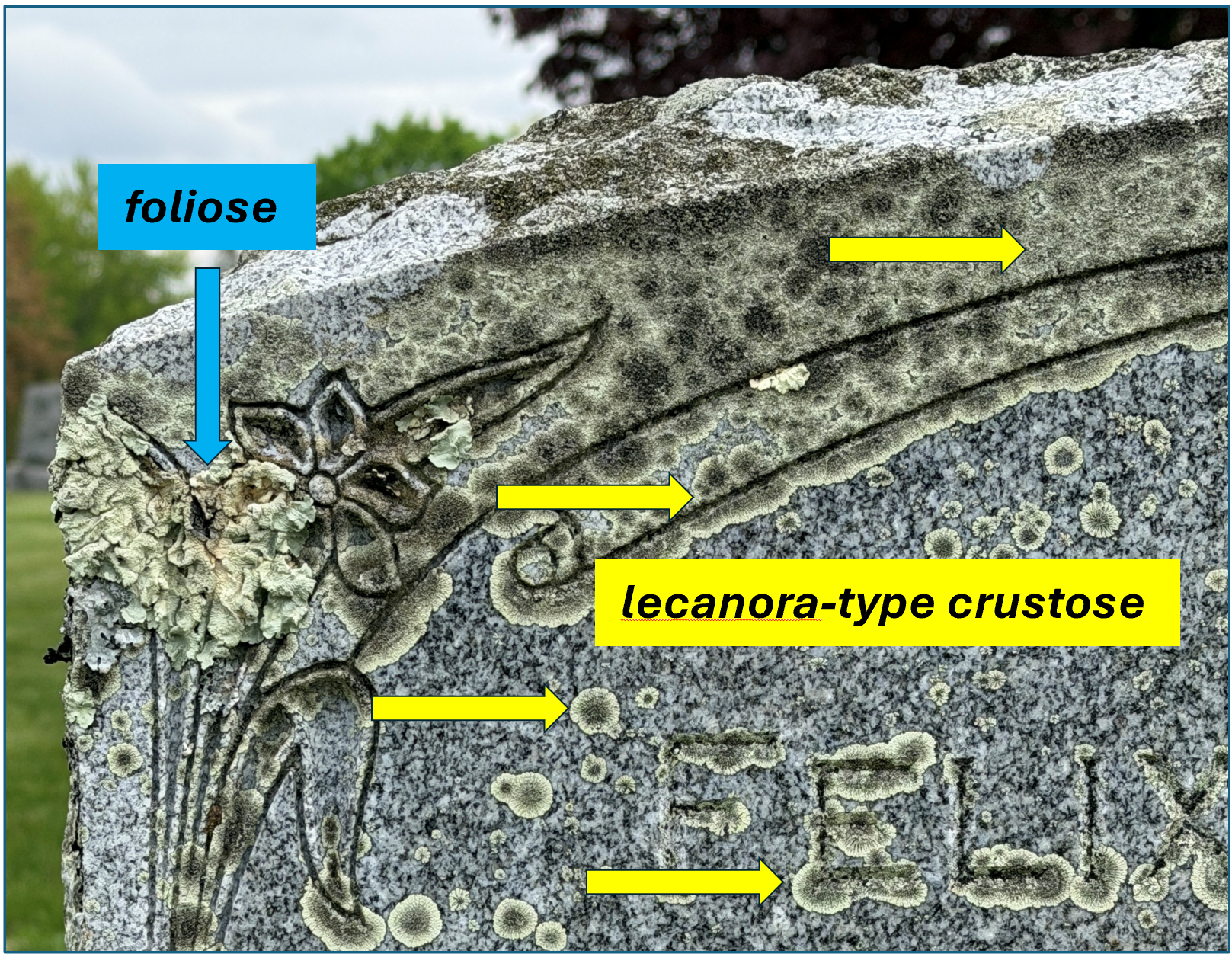
Foliose and the dreaded lecanora-type crustose lichen
That’s why we:
Always use a biological solution developed for headstone cleaning. No picking up a bargain “spray it and forget about it” that’s not been tested on headstones. (D/2 or Endurance Monument Cleaner are formulated, tested, and are the ones I personally use.)
Never use wire brushes to clean a headstone (ever!). Even the hardest granite will scratch or chip with wire. Use a natural or nylon bristle brush, starting with the softest and working towards stiff as needed. Beginning with the stiffest bristles won’t save you time and could cause damage to delicate scroll work or other engravings.
Let the solution do the work. Spray it on the stone, then give it time to soak in. Your headstone may start turning a rust or yellow color after a few minutes (a process called “blushing”). Even if it doesn’t, the product is working to soften and kill the lichen, making it easier to remove.
Can it be done in one visit?
There are plenty of cleaning videos online showing beautiful transformations. I love seeing those old, neglected stones shine once more. The magic of video makes it look effortless: spray, scrape, rinse, done! What they don’t tell you is the elapsed time between the first and final pictures. It’s not a day. Sometimes it’s two months or more. And the work isn’t usually completed in one visit.
In simple terms, think of headstone cleaning in layers of progress: First remove the light, flaky lichen that looks leafy (this is foliose lichen and is satisfying to just knock off with a plastic scraper or wooden paint stirrer). Then use biological solution and brushes to remove the surface-level lichen, dirt, and mold. Finally, work with more solution, brushes, and wooden picks to get to the final layer of lichen that clings to the small crevices in the stone.
This last layer takes the most work. And it is easier to complete if you’ve given the solution time to work. There’s only so much you can do each trip before your progress slows. So spending an afternoon on one headstone is not an efficient use of your time. Personally, I work for roughly an hour and a half each visit. After that I’m ready to move on to something else!
Here’s how I handle the end of each cleaning visit:
Spray the stone with water to rinse off all the loosened organic material (especially lichen) that you scraped, brushed, and picked off.
Spray each surface of the stone with solution, paying particular attention to areas that have tougher lichen spots.
Take your full front and full back shots and look around the site for any brushes or picks you may have left on the ground. :-)
So this summer, whether you’re cleaning a headstone for a client or you’re testing out techniques on your personal stones, be strategic and let the biological solution do most of the work. Maybe you’ll have some time to get a glass of lemonade and enjoy the sun!